
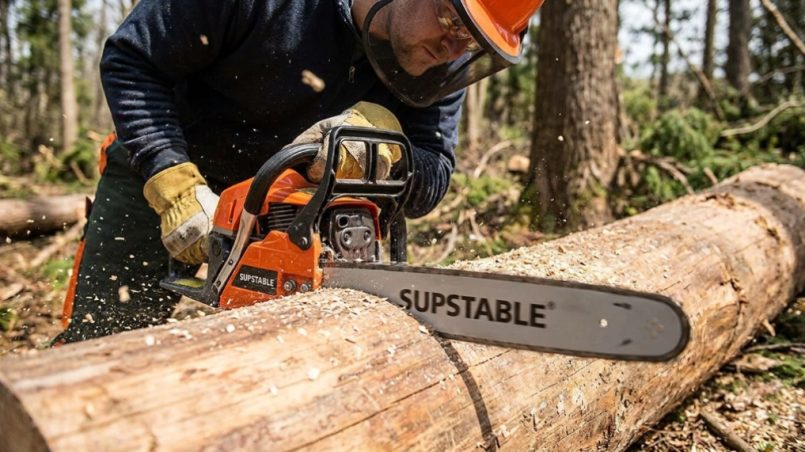
If you are comparing cordless options and want the best chainsaw for branch trimming, the Supstable mini chainsaw deserves a close look because of its brushless motor, light weight, and one-handed control. This review breaks down how it actually behaves in real trimming situations, where it struggles, and whether it makes sense for your yard. You will also see which tasks it handles well, which it cannot, and how it compares with full-size saws so you can decide before buying.
Key Takeaways
- The Supstable mini chainsaw is purpose-built for light limbing and branch trimming, not for felling trees or cutting firewood.
- A brushless motor generally means longer runtime, less heat buildup, and fewer maintenance issues than a brushed equivalent.
- Battery voltage and amp-hour rating matter more than listed maximum cutting diameter for real-world performance.
- Safety features like the hand guard and trigger lock are not optional; mini saws still cause serious kickback injuries.
- Match bar length to branch thickness: a short bar on thick hardwood stalls quickly and drains the battery fast.
What the Supstable Mini Chainsaw Is Built For
This is a compact, battery-powered mini chainsaw meant for pruning limbs, cutting small branches into manageable pieces, and light yard cleanup. It is not a replacement for a gas or full-size electric chainsaw used for felling or bucking logs. If your work is mostly overhead or awkward-angle cuts on branches under roughly four inches in diameter, this category of tool is genuinely useful. If you need to drop a tree or section a trunk, it is the wrong tool.
The reason this format works is weight and reach. Holding a standard chainsaw above shoulder height gets tiring within minutes and increases the risk of losing control. A mini chainsaw reduces that fatigue and lets you keep one hand on the branch you are cutting. That convenience comes with a real trade-off: less cutting power, shorter runtime, and a much smaller cutting window before the tool overheats or the battery drains.
The Brushless Motor: What It Actually Changes
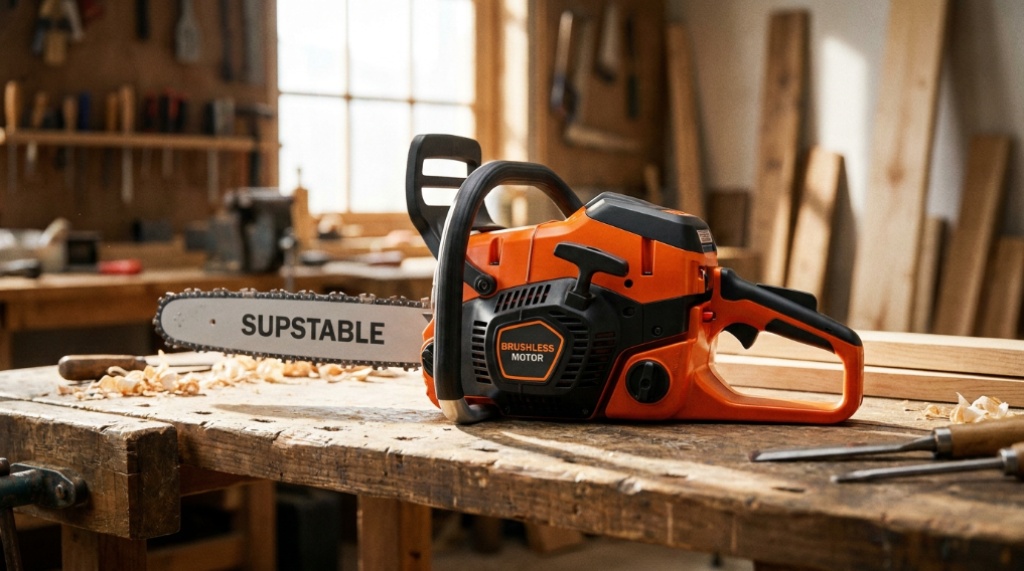
A brushless motor replaces physical carbon brushes with electronic commutation. In practice, that means fewer wear parts, better efficiency, and less heat for the same output. For a trimming tool that runs in short bursts, the benefit shows up as steadier power as the battery drains and less downtime between cuts.
Runtime and Heat Behavior
Brushless motors do not make a small battery last forever. With continuous cutting of dry hardwood, expect noticeable performance drop as the cell discharges. The practical fix is to cut in short sessions, let the motor and bar cool, and keep a spare battery on hand if you have a lot of branches. This is normal for the category, not a defect specific to this saw.
Maintenance Implications
With fewer wearing parts, you spend less time worrying about brush replacement and more time on the parts that actually need attention: chain tension, bar lubrication, and keeping the chain sharp. A dull chain is the single most common reason people think a mini chainsaw is underpowered.
Cutting Performance on Real Branches
Performance depends heavily on wood species, moisture content, and chain sharpness. Fresh softwood cuts fast; dry hardwood of the same diameter can take several times longer and produce much more heat and battery drain. The saw handles clean, straight cuts well. It struggles with knots, embedded dirt, and branches under tension that pinch the bar.
One technique that makes a measurable difference is removing tension before cutting. Cut a small notch on the underside of a branch that is bending, then finish from the top. This prevents the branch from pinching the bar and stalling the motor, which is one of the fastest ways to drain a small battery.
If you are comparing this model against alternatives for light pruning work, this breakdown of the best chainsaw for branch trimming covers the trade-offs between bar length, battery platform, and weight in more detail.
Battery, Charging, and What to Expect
Runtime claims on any cordless tool are measured under ideal conditions. Real numbers depend on branch thickness, wood type, and how hard you push the saw. Pushing harder does not cut faster, it just heats the motor and drains the battery.
- Thin, green branches: longest usable runtime, minimal strain.
- Dry hardwood near the bar’s limit: short bursts, frequent cooling, fastest drain.
- Cold weather: lithium batteries lose capacity, so plan for reduced runtime in winter pruning.
Charging time is typically reasonable for a homeowner tool, but if you have hours of work, a second battery is more practical than waiting on a single charger, if you are also looking to upgrade your heavy-duty workshop tools, check out our guide on what to consider when choosing a bending machine.
Safety and Handling
A mini chainsaw is still a chainsaw. Kickback can happen when the top of the bar tip contacts wood, and the tool will move fast. The hand guard and trigger lock exist for a reason, and bypassing them is how injuries happen.
- Wear eye and hearing protection; goggles, not just glasses.
- Keep both feet stable and never cut directly overhead.
- Watch for hidden fencing wire and metal in old branches; it destroys chains instantly.
- Let the chain stop fully before setting the tool down or moving between cuts.
Who Should Buy It, and Who Should Not
This tool fits homeowners, gardeners, and anyone maintaining fruit trees, hedges with woody stems, or storm-damaged limbs. It is a strong choice if your main job is light trimming and you value being able to work one-handed at awkward angles.
It is a poor fit if you need to process firewood, cut anything thicker than a few inches regularly, or work for hours without a charging break. In those cases, a full-size electric or gas chainsaw is the correct purchase, and no mini saw will substitute for it.
Frequently Asked Questions
Is a mini chainsaw powerful enough to cut tree branches?
Yes, for branches within its bar’s cutting range, typically up to a few inches in diameter. It is not designed for trunks, thick limbs, or prolonged cutting, and it will stall or overheat if pushed beyond those limits.
How long does the battery last on a brushless mini chainsaw?
Runtime varies widely with wood type and thickness. Thin green branches give the longest usable time, while dry hardwood near the bar’s limit drains the battery fastest. Carrying a spare battery is the simplest solution for larger jobs.
Do brushless motors really make a difference?
They improve efficiency, reduce heat, and eliminate brush wear, which usually means longer tool life and steadier power. They do not overcome the limits of a small battery or a short bar.
Can I use a mini chainsaw one-handed?
These tools are designed for one-handed use, but that does not mean it is always safe. Keep your other hand clear of the cutting path, position yourself so a kickback will not pull the bar toward your body, and never reach across the blade.
What maintenance does a mini chainsaw need?
Check chain tension before each use, keep the bar and chain oiled, and sharpen the chain regularly. A sharp chain prevents most of the performance complaints people have with small saws.
Is it worth buying for occasional yard work?
If your yard work is mostly trimming small branches and light cleanup, yes. If you only cut a few thin limbs once a year, a manual pruning saw may be cheaper and just as effective.
Conclusion
The Supstable mini chainsaw with a brushless motor is a sensible tool for light branch trimming, provided you match it to the job. It is light, convenient at awkward angles, and the brushless design supports longer tool life and steadier power. It will not replace a full-size saw, and pushing it beyond its limits leads to stalls and fast battery drain. Buy it for pruning and cleanup, keep a spare battery, and keep the chain sharp. If your tasks are heavier, choose a larger saw instead.
