
If you’ve ever balanced a vacuum against the wall only to watch it clatter to the floor, you know the frustration. A self-standing cordless vacuum solves that specific annoyance, but it also raises a bigger question: are these models actually worth it, and which one fits your home? The market is crowded with options that claim to offer convenience, power, and freedom from wall mounts. This article breaks down the real differences, what to look for, and how to choose a model that will genuinely make cleaning easier—not just in theory, but in your daily routine.
Key Takeaways
- Self-standing models eliminate the need for wall-mounted docks, making them ideal for renters, garage storage, or homes without available wall space.
- Battery life and charging speed matter more than peak wattage when comparing cordless performance.
- A true self-standing mechanism involves more than just a flat base—it requires balanced weight distribution and a sturdy latch system.
- Consider your flooring type and whether you need a dedicated motorized brush for carpets versus a soft roller for hard floors.
- Price differences often reflect build quality and bin capacity, not just brand reputation.
What Does “Self-Standing” Really Mean in a Cordless Vacuum?
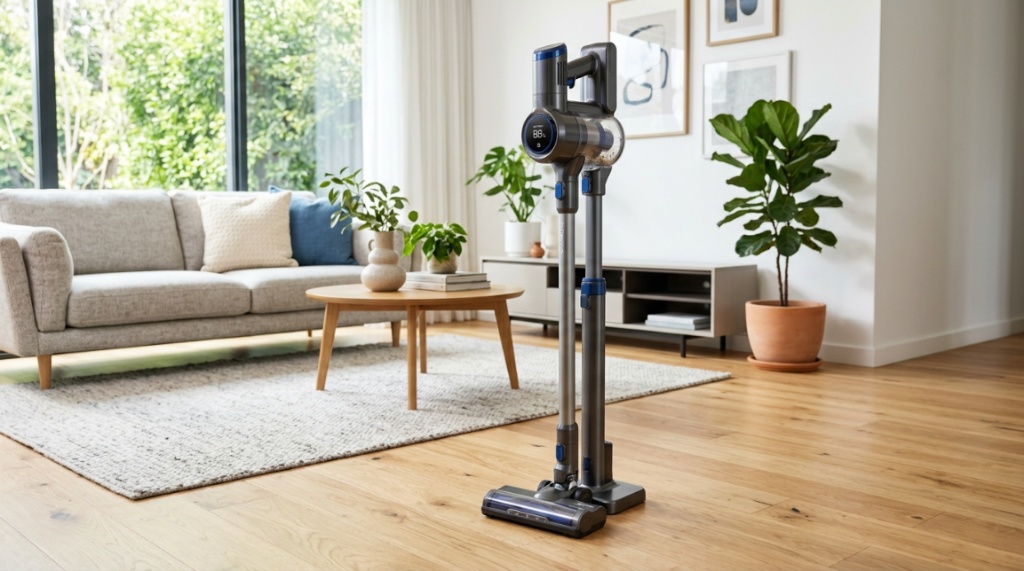
To put it simply, a self-standing cordless vacuum can rest upright on its own without leaning against furniture or clicking into a wall bracket. Whenever you stop vacuuming to move a chair or answer the phone, you can just let go of the handle—and it stays put. This isn’t just about convenience; it’s about safety too. A falling vacuum can dent baseboards or startle pets, and no one wants to chase a rolling appliance down a hallway. Understanding what makes this feature possible helps you evaluate quality. In a reliable self-standing cordless vacuum, the center of gravity is positioned low and toward the rear. Usually, the battery pack and dustbin are placed near the base of the unit to provide that stability. It’s a different engineering challenge than wall-mounted models, which can be lighter because they don’t require the same counterbalance. That’s why some cheap “standing” models feel top-heavy and tip over constantly. When browsing, look closely at user reviews that mention whether the unit “stays upright on stairs” or “falls over on thick carpet.” These comments reveal how well the design actually works in the real world. There is a notable difference in weight distribution across models. Some use a wide footplate that extends outward, while others rely on a heavy battery mounted low on the back. Both approaches work, but a wide footplate might snag on furniture legs. A low-mounted battery, if designed well, keeps the footprint slim. Take a moment to think about how you store your appliances. If you plan to park the vacuum in a closet corner, a narrow footprint is helpful. If you plan to keep it in the middle of a laundry room, a wide base might be fine.
Why Choose a Self-Standing Model Over a Wall-Mounted One?
Wall-mounted cordless vacuums have been the industry standard for years, mainly because they solve the charging and storage problem in one swoop. But they also come with a requirement: you must drill holes in your wall. For homeowners, that’s usually not a big deal. For renters, or for people who live in apartments with plaster walls or concrete blocks, that requirement is a non-starter. A freestanding design offers genuine flexibility in where you can keep the machine. You can store it in a pantry, a home office, or even a mudroom without needing to find a stud. This benefit extends to charging as well. Because the dock is not the primary storage location, many self-standing models allow you to charge by plugging the adapter directly into the handle. That means you can charge the unit in a utility room but store it in a hallway closet, depending on your daily needs. Another overlooked advantage is portability between levels. If you have a split-level home or a stairwell, carrying a wall-mounted vacuum to the second floor requires lifting it off the dock. It can be a hassle if you clean upstairs often. With a self-standing unit, you can keep the vacuum upstairs for a day and bring it back down later without worrying about re-docking it.
Key Performance Features to Evaluate Before Buying
When you compare different upright stick vacuums that stand on their own, specifications can get confusing. Air watts, suction power, and RPM numbers vary widely across brands. Rather than getting stuck on these figures, focus on how those numbers translate into real cleaning ability.
Battery Technology and Runtime
The battery isn’t just a power source; it’s also a structural element in a self-standing design. Most modern units use lithium-ion cells that provide 30 to 60 minutes of runtime on a standard mode. If you have a home larger than 1,500 square feet, a runtime of under 40 minutes might force you to recharge mid-clean. Check whether the vacuum has a removable battery. Swappable batteries are a huge plus because you can buy a second pack and double your cleaning time instantly. Keep in mind that “max power” mode cuts runtime drastically—often down to 8 to 15 minutes—so think about whether you need that boost for the whole house or just for one stubborn rug.
Filtration and Allergen Containment
Consider what happens to the air that passes through the machine. If you have allergies, a HEPA filter is important. Stage separations (like cyclonic filters) also help keep larger debris out of the filter, preserving suction over time. When a vacuum is self-standing, the dustbin is often larger because the unit can support more weight. A bigger bin means you won’t have to empty it as frequently, which is nice on deep-clean days. Look for a bin capacity of at least 0.5 liters for a stick vacuum.
Brush Roll Design and Flooring Compatibility
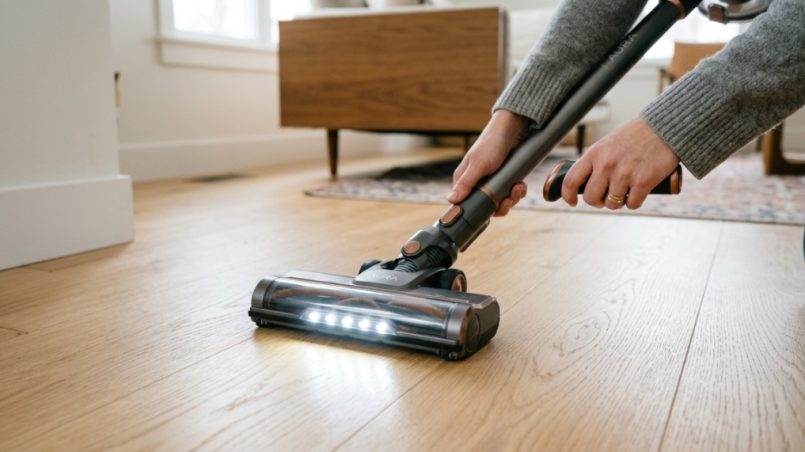
The brush roll is the part that actually contacts your floors, so its design matters. If you have wall-to-wall carpet, you want a brush with stiff bristles to agitate dirt out of the fibers. If you have hardwoods, a soft roller that won’t scratch the surface is safer. Some vacuums now feature a single brush that works on both hard floors and low-pile rugs, but they can’t perform optimally on both. If your home has a mix of surfaces, you may need to choose between a dual-brush system or a vacuum that lets you switch heads easily.
What to Look for in the Motor and Suction System
It’s easy to assume that higher wattage equals better cleaning, but in cordless vacuums, that’s not always true. The motor efficiency, the seal of the air path, and the design of the cyclonic chambers all play crucial roles. A vacuum with a high suction figure but a leaky hose connection will underperform. You should look for a model that specifies digital motors—they tend to run more efficiently and last longer than universal motors found in older models. When evaluating suction, pay attention to whether the vacuum has multiple power settings. A single-speed motor is usually either too weak for deep carpets or too strong for delicate rugs. A machine that offers eco, standard, and boost modes provides the flexibility to coordinate with your cleaning task. Keep an eye on the brush roll’s “auto” mode. Some vacuums can sense when they move from a hard floor to a carpet and increase brush speed automatically. That kind of smart feature makes a self-standing cordless vacuum much more pleasant to use because you don’t have to keep bending down to adjust settings,
If you are dealing with chronic aches while doing household chores like cleaning, check out our guide on choosing the right Bed and Mattress When you Suffer from Back and Neck Pain.
How to Choose the Right Model for Your Floor Plan
Think about your living space before you commit to a purchase. A self-standing cordless vacuum works well in open-plan areas where there’s floor space to park it. However, if your home is packed with furniture, you might find that a compact wall-mounted unit stores better. Conversely, if you have a designated cleaning closet, losing a wall mount isn’t a problem at all. For pet owners, the primary concern is hair wrap. Check if the brush roller is designed with anti-tangle technology. Curved bristles or comb-like inserts help pull hair off the brush and into the bin. If a vacuum lacks this feature, you will spend maintenance time cutting hair off the roller with scissors. There is a product in this category that has gotten attention for balancing these factors—the self-standing cordless vacuum from Jellypig. It’s worth checking out if you are dealing with pet hair and mixed flooring, as it offers a 650W motor and a standing dock that doesn’t require drilling. While specific performance can vary based on your home, models like this show the direction the industry is taking—toward more flexible storage and higher power.
Frequently Overlooked Factors
When you are reading specs online, it is easy to miss crucial usability issues. Here are a few things you should specifically search for in the manual or the questions section:
- Charging time: Some vacuums require 4–5 hours to recharge. If you have a big home, you might need to charge overnight. Find out the quick-charge capability (e.g., 30 minutes to 50%).
- Trigger lock: Some cordless vacuums require you to hold down a trigger to keep the motor running. This is tiring for long sessions. Look for a model with a locking switch if you suffer from hand fatigue.
- Standing stability on carpets: Roll the vacuum over a thick rug and see if the head tilts upward. A self-standing vacuum that tips over when you pull it backward over a high pile rug is very annoying.
- Washable filter: Filters need eventual cleaning. Ensuring the filter can be washed and dried saves money on replacements.
Maintenance Tips to Extend the Life of Your Cordless Vacuum
 Even the best self-standing cordless vacuum won’t last long without proper care. Debris accumulating in the dustbin or on the filter will slowly choke the motor. Here are practical steps to keep yours running like new:
- Empty the bin after every use. Don’t let dirt sit inside, especially if the bin is clear plastic; scratched dust can cause it to look dirty permanently.
- Remove hair from the brush roll monthly. Even anti-tangle brushes need occasional help if you have very long-haired pets.
- Rinse the exhaust filter every two months. use cool water and let it dry completely before reinserting. Never put a wet filter directly into the vacuum.
- Store the vacuum upright when not in use. Sliding it under a bed or leaning it sideways can put unnecessary pressure on the swivel neck and damage the self-standing latch.
- Inspect the battery health. If you notice the runtime dropping significantly (e.g., from 40 minutes to 20), it might be time for a replacement battery.
Weighing the Trade-offs
While self-standing vacuums are highly convenient, they do have some downsides. They are generally heavier than wall-mounted units because of the extra material needed for the base. That weight can be uncomfortable if you aim to vacuum your ceilings or use it as a hand vac for high shelves. Also, if the design places the motor low on the unit, the exhaust air blows toward the floor, which can stir up dust if you are pointing the wand upward. Additionally, the range of available models is smaller than traditional stick vacuums. However, as more brands realize the storage benefits for renters, the selection is growing. Don’t disregard a model just because it’s slightly heavier on paper; a lower center of gravity often feels lighter during operation because the weight is supported more naturally.
Frequently Asked Questions
Can a self-standing cordless vacuum clean stairs safely?
Yes, but you should detach the stick and use the handheld portion for stairs. Trying to balance a full-length vacuum on a step is dangerous, even if the unit can stand upright on a flat surface.
How long does the battery take to charge?
Charging times vary by model. Most take between 3.5 and 5 hours for a full charge. Some luxury models offer a quick charge feature that gives you 30 minutes of use after only a 30-minute charge. Check the user manual for the specific fast-charge specifications.
Is a cordless vacuum as powerful as a corded upright?
The gap is closing, but corded vacuums still hold an edge in sustained high-power suction for deep plush carpets. However, cordless models are now powerful enough for 95% of household cleaning tasks, and their ease of use often means you will vacuum more often.
Can I wash the HEPA filter in a self-standing vacuum?
Only if the manufacturer explicitly states it is washable. Many HEPA filters are paper-based and will disintegrate if rinsed. Others are washable. When in doubt, it’s safer to tap the filter against a trash can to loosen dust rather than soaking it.
Do these vacuums tip over when going from hard floors to rugs?
Quality units are designed with a balanced hinge joint that keeps the body stable. However, if you hit a rug with the front edge of the head at high speed, it can cause a jolt. Lifting the head slightly as you transition over a thick rug reduces this risk.
What is the ideal runtime for a full house clean?
For a house up to 2,000 square feet, look for a runtime of at least 40 minutes on the standard mode. A removable battery doubles your cleaning capacity and adds useful versatility.
Conclusion
Choosing a self-standing cordless vacuum ultimately comes down to your storage situation and your physical tolerance for weight distribution. These models offer great convenience for homes where wall mounting isn’t practical, and they pair that with the suction power you need for modern cleaning. Look past marketing jargon about motor wattage and focus on the battery, the brush head, and the locking mechanism that provides the standing stability. If you get those details right, you will enjoy a hassle-free cleaning tool that is always ready when you are. If you are leaning toward the flexibility of a freestanding design, take the time to compare the depth of the base and the location of the battery release switch—these small details influence daily usability more than you’d think. A vacuum that stands confidently in the corner is one you will actually reach for frequently.